Skip to the text
About

Field 3 of 4

Pictograms & Icons

The history of pictogram systems, Isotype, the visual language of airports and road signs, and how icons get recognized.

Quarterly, the third vert · 3 files

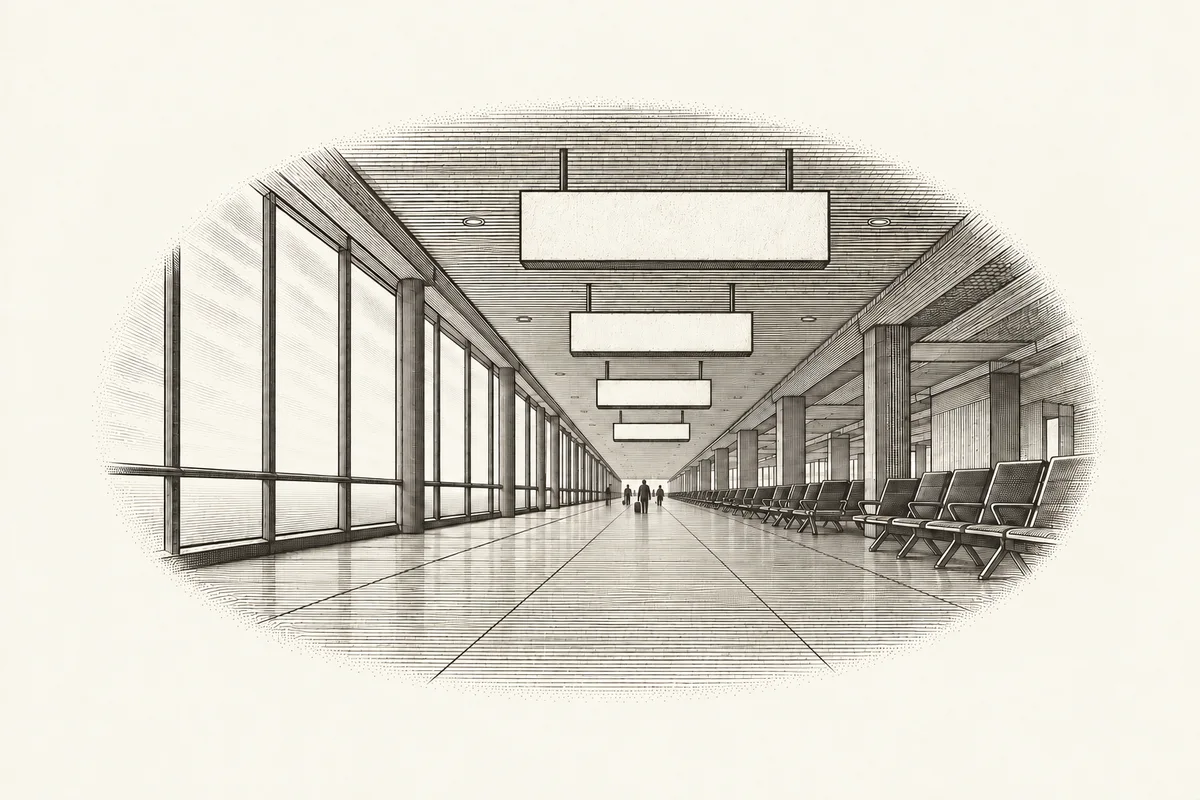
Illustration: pale paper; a long airport concourse with blank sign panels hanging from the ceiling, travelers far off: an airport
Credit and reuse terms

Illustration: Banners & Banknotes. Generated schematic illustration — not a photograph or historical record. © Banners & Banknotes, all rights reserved.
Flagship file

DOT/AIGA Symbol Signs: 34 in 1974, 16 More in 1979

All 50 DOT/AIGA symbol signs, redrawn: 34 from a 1974 report for the US Department of Transportation and 16 added in 1979, with who chose them and how.

More files in Pictograms & Icons

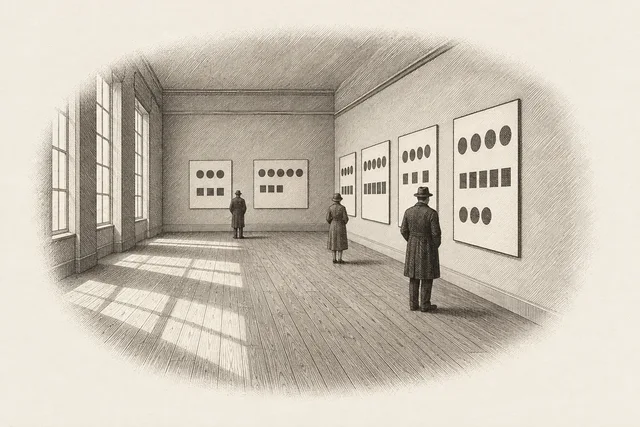
  1. Illustration: pale paper; a museum gallery hung with chart panels of plain dots and squares, visitors seen from behind

    No. 0003System explainer

    Isotype: More Means More Signs, Not a Bigger Sign

    Otto Neurath's Isotype shows a larger amount with more signs of one size. See his 1936 rules, who drew the signs, what the name means and its road-sign links.

    Credit and reuse terms

    Illustration: Banners & Banknotes. Generated schematic illustration — not a photograph or historical record. © Banners & Banknotes, all rights reserved.

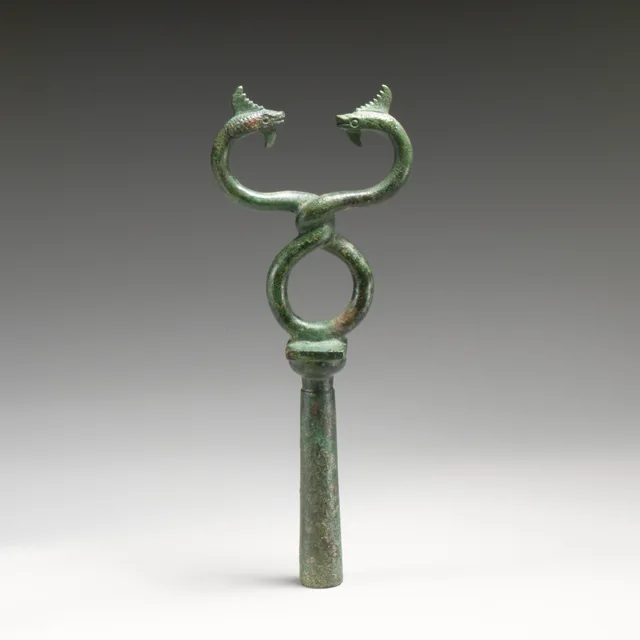
  2. Green bronze staff head on gray; two snakes knot into a loop, rise apart and curve back, crested heads facing: Greek kerykeion finial

    No. 0007Object file

    Caduceus: Count the Snakes Before Calling It Medical

    The caduceus has two snakes and belonged to Hermes the herald; medicine's rod of Asclepius has one. See how the caduceus reached medicine, from 1538 to 1902.

    Credit and reuse terms

    "Bronze finial of a kerykeion (herald's staff) MET DP21009" by The Metropolitan Museum of Art — https://commons.wikimedia.org/wiki/File:Bronze_finial_of_a_kerykeion_(herald%27s_staff)_MET_DP21009.jpg — CC0 1.0 (https://creativecommons.org/publicdomain/zero/1.0/)